Big Farm: Mobile Harvest
- 4.0
- Rating
- 50.00M
- Installs
- Free
- Price
 Analysis by App-foxy
Big Farm: Mobile Harvest is the kind of casual farming game that feels immediately understandable: plant something, wait for it to grow, collect the result, feed animals, and put the next improvement in motion. I found that clarity appealing during the first sessions because there is very little friction between opening the game and knowing what to do. Developed by Goodgame Studios, it takes the familiar farm-simulator idea and turns it into a steady routine built around short decisions rather than complicated controls.
That easy beginning is also the reason I would not judge it only by its first hour. A farming game can be pleasant at first and then become a chore once the early goals disappear. My experience with this one is more balanced: it has enough structure to become part of a casual gaming habit, but its long-term value depends heavily on whether you enjoy repeating production cycles and managing gradual progress. It is free to start, rated for Everyone, and available as a casual game for players who prefer a relaxed pace over action or demanding strategy.
From the first harvest to a lasting routine
I start by looking at what it costs to try the farm, then consider what its steady planting, animal care, and building routine gives back over time. That distinction matters here: free access makes a low-pressure test possible, but optional purchases can change the experience if spending becomes part of how you want to progress. With that in mind, the next section looks at whether the routine itself earns a place in an ordinary day.
You May Also Like

 AccuWeather: Weather Radar
AccuWeather Review: A Quick, Clear Forecast for Everyday Decisions
For everyday plans, the best forecast is the one you can understand quickly. AccuWeather makes rain timing, radar, and local conditions easy to act on, with a few trade-offs.

 Hill Climb Racing
Why Hill Climb Racing Still Turns Crashes Into One More Run
A tiny car, a bumpy hill and one more upgrade: Hill Climb Racing keeps resurfacing because its simple chaos makes every near-miss feel personal.

 AliExpress - Shopping App
AliExpress Makes Global Shopping Feel Personal, but Shoppers Bear the Risk
AliExpress turns a global marketplace into a pocket-sized discovery engine. Its reach is useful, its shopping loop compelling, and its trade-offs easy to miss.

 Lords Mobile: Kingdom Wars
Lords Mobile Is a Kingdom-Building Routine, Not a Quick Match
A case-by-case verdict on the building, battles, device demands, and social commitments that make Lords Mobile rewarding for some players and exhausting for others.

 PDF Scanner app - TapScanner
TapScanner Makes Paperwork Easier to Capture, Check, and Share
TapScanner makes scanning with a phone feel less like a rescue operation and more like a dependable step in getting work done. Its capture tools are useful, though not flawless.

 Block Blast!
 Shows How Much a Puzzle Game Can Leave Out
A quiet grid game shows why puzzle players increasingly value instant clarity, repeatable skill and low-pressure play—and where the genre still needs to catch up.
More From Our News Desk
View All News


Why the opening feels so approachable
The first-week appeal comes from how naturally the activities connect. Growing plants gives the farm a basic rhythm, while animals add another reason to return. Building then gives those actions a visible purpose: the farm is not just a collection of timers, but a place that slowly becomes more developed through the choices I make. Even when the individual tasks are simple, the sequence creates a satisfying sense of movement.
I especially like that the game suits small gaps in the day. I can check it while taking a break, start a few tasks, leave, and come back later when there is something ready to collect. That makes it a better fit for a commute, a quiet evening, or a few minutes between other activities than for someone looking for a game that demands continuous attention. The controls and basic loop are friendly enough that a new player does not need to learn a dense rule set before enjoying the farm.
The appeal is not really about surprise. Most players will recognize the broad farming formula quickly. The pleasure comes from arranging a sequence of small actions and watching the results accumulate. I found the early progress motivating because each completed task points toward another manageable goal. That structure gives the game a gentle sense of momentum without turning the opening into a stressful tutorial.
How I would play it during an ordinary day
A realistic routine might begin in the morning by collecting finished crops and checking which animals need attention. Before leaving, I would start production that matches the time available later. During a short break, I could collect another batch and queue something else, then return in the evening to make a few building or expansion decisions. The important point is that the game works best when I fit it around my schedule rather than treating every notification or waiting period as an obligation.
One useful habit is to avoid starting every available task at once. I get more value from looking ahead and choosing activities that will finish when I am likely to return. Shorter jobs make sense before a brief break, while longer ones are better for overnight or work periods. This is a small planning detail, but it prevents the farm from feeling like a row of disconnected buttons and makes the waiting time feel more intentional.
I also recommend deciding what kind of session I want before opening the game. If I only have a minute, collecting and restarting a few activities is enough. If I have more time, I can review the farm’s development and make a broader improvement choice. Separating those two kinds of visits keeps the game from swallowing more attention than I intended.
The farm as a light management puzzle
Although it is presented as a casual experience, the enjoyable part is not simply tapping on plants. The farm asks me to balance immediate rewards with longer progress. Feeding animals may support the next stage of production, while planting choices affect what I can do later. Building decisions also compete for attention, so I have to decide whether I want a quick improvement or to work toward something that takes more patience.
This is where the game becomes more interesting than a purely decorative farm. I am constantly choosing what deserves the next available action. The decisions are not difficult in the way a traditional strategy game is difficult, but they give the routine a little texture. Players who enjoy organizing a small workflow will probably find more satisfaction here than players who only want to decorate a landscape.
A practical tip is to treat storage and production as one connected problem rather than separate chores. If I produce items without thinking about what I will need next, I can end up with a farm that is active but poorly prepared. Checking the next likely objective before committing resources makes the session more efficient. This kind of planning is easy to overlook because the game presents each action so simply.
What changes after the novelty fades
After the initial excitement, the question becomes whether the loop still feels rewarding when the next improvement is no longer new. For me, the answer is yes in short visits, but less consistently in long sessions. The game is strongest when I accept its pace and enjoy incremental progress. It is weaker when I expect a constant stream of fresh mechanics or dramatic changes.
The farm’s lasting appeal comes from accumulation. A small gain today matters because it contributes to a larger, more developed operation later. That can create a comfortable background hobby, especially for players who like checking progress over time. However, accumulation alone does not suit everyone. If I need frequent novelty, the same planting, feeding, collecting, and building pattern can begin to feel predictable.
That distinction is important when comparing it with other casual games. A puzzle game may give a clearer burst of satisfaction in every round, while an action game may provide more immediate variety. Big Farm: Mobile Harvest asks me to value continuity instead: the reward is seeing a farm become more capable through repeated attention. I would choose it over those alternatives when I want a low-pressure routine, not when I want constant stimulation.
Monthly value and the role of habit
Its month-to-month value depends on whether the farm becomes a pleasant habit rather than a list of duties. I think it can earn that place for players who enjoy returning to a familiar project. The game gives me a reason to check in, make a few choices, and leave with the feeling that something has moved forward. That is a modest kind of satisfaction, but it can be surprisingly durable.
The best long-term approach is to set a personal boundary around play. I would rather make two or three purposeful visits than repeatedly reopen the game just because something might be ready. This keeps the farm connected to my day without making it dominate my attention. It also protects the main strength of the experience: its relaxed character.
For a family or shared household, the Everyone rating makes the game approachable in terms of its intended audience. I would still explain that free access does not mean every optional purchase is free. The listed in-app purchase range runs from $0.99 to $384.99 per item, so I would use device purchase controls and agree on a spending rule before handing the game to a child. That is not a reason to reject the game, but it is a practical part of using it responsibly.
The large player base suggests that the basic farming formula has broad appeal. The game has passed 50 million installs, and its average rating is 4.0 from roughly 437 thousand ratings. I read that as evidence of a well-established casual experience rather than proof that every player will enjoy the pacing. A popular game can still be a poor match for someone who dislikes timers, repeated collection, or gradual upgrades.
Maintenance: what the game asks from me
The maintenance burden is moderate, but it is easy to underestimate. The farm rewards regular attention because planting, animal care, and building work best when they are coordinated. If I disappear for too long, I lose the rhythm that makes the system satisfying. On the other hand, I do not need to treat it like a full-time responsibility. The game remains most enjoyable when I decide in advance how often I am willing to check it.
I found that a simple priority order helps: collect anything that unlocks the next action, keep the most useful production moving, then spend remaining time on development. Without a priority, a visit can turn into aimless tapping. With one, even a short session has a clear beginning and end. This is one of the more valuable lessons the game offers, because it turns a potentially repetitive loop into a small planning exercise.
Another useful workflow is to reserve some attention for future needs instead of spending every resource immediately. Fast progress can feel good, but leaving the farm without a buffer may make the next visit awkward. I prefer steady flexibility to squeezing the maximum reward from one session. That choice may slow visible progress slightly, yet it makes the overall routine less brittle.
The current version is 10.94.40137, and the minimum operating-system requirement is Android 7.1. Those details matter if I am installing it on an older device. The game is free to download, but the presence of optional purchases means I would also check who controls the device and whether spending restrictions are enabled. Those are simple preparations that prevent the farm from becoming a source of avoidable frustration.
Where fatigue begins
The main source of fatigue is repetition without a meaningful decision attached to it. Planting, collecting, and feeding are pleasant when they support a clear goal. They become maintenance when I perform them automatically without feeling that my choices matter. The game cannot remove that risk because its identity is built around recurring tasks.
Waiting can create a second kind of fatigue. A relaxed pace is part of the appeal, but it can also make progress feel slow when I am focused on one particular improvement. Players who prefer immediate completion may be tempted to spend rather than wait. I would not recommend approaching the game with that mindset. The free experience makes more sense when patience is treated as part of the design, not as an obstacle to bypass.
There is also a difference between productive repetition and decorative repetition. If I enjoy watching the farm expand and organizing its activities, routine feels rewarding. If I mainly want a visually changing environment, the work involved may feel heavier than the result. In that case, a simpler decorating game could be a better choice because it would place less emphasis on recurring production.
Compared with other farming simulators, this one is a stronger fit for players who want a guided, ongoing mobile routine. A more detailed simulation may offer deeper control over seasons, markets, or specialized systems, while a smaller casual farming game may be easier to finish in one sitting. Big Farm: Mobile Harvest sits between those extremes: it offers enough management to support a continuing habit, but not the intensity I would expect from a serious simulation.
Who should make room for it
I would recommend it to someone who likes gentle progress, short check-ins, and the satisfaction of improving a virtual farm over time. It is particularly suitable for players who enjoy deciding what to grow, when to return, and which development step deserves priority. The animal and building elements also help the experience feel broader than a simple crop timer.
I would be more cautious with players who want a complete game session with a clear ending. This farm is designed around continuation, so it may feel unsatisfying if I expect to finish a meaningful chapter every time I play. I would also suggest skipping it if timers, repeated resource collection, or optional purchases are likely to irritate you. Those are not side details here; they are closely tied to the central loop.
It is also not my first recommendation for someone seeking competitive play, fast reflex challenges, or a story-led adventure. The game’s pleasure is quieter and more domestic. Its strongest moments come from planning a small chain of farm activities and returning later to see the outcome, not from dramatic events or difficult encounters.
My long-term verdict
After the novelty fades, Big Farm: Mobile Harvest earns lasting space only if I enjoy the rhythm of maintenance. I do not think it is a game that constantly reinvents itself in my hands. Instead, it offers a dependable routine: grow, feed, build, check the next need, and gradually make the farm more capable. That consistency is its strength and its limitation at the same time.
For me, the right way to play is deliberately modest. I keep visits short, plan around my real schedule, and avoid treating every unfinished task as urgent. With that approach, the farm becomes a pleasant background hobby rather than another obligation. The free entry point makes it easy to test that rhythm, while the Everyone rating makes it broadly approachable; I would simply keep the in-app purchase range in mind when setting up a shared device.
The lasting value is not in constant novelty, but in a routine that remains comfortable enough to revisit. If that sounds appealing, this casual farming game is worth trying. If you need rapid variety, deep simulation, or a firm endpoint, another genre will probably serve you better. My final view is positive but conditional: it is a good home for a relaxed daily habit, provided I am willing to accept repetition as part of the harvest.
FAQs for Big Farm: Mobile Harvest
01What is Big Farm: Mobile Harvest?
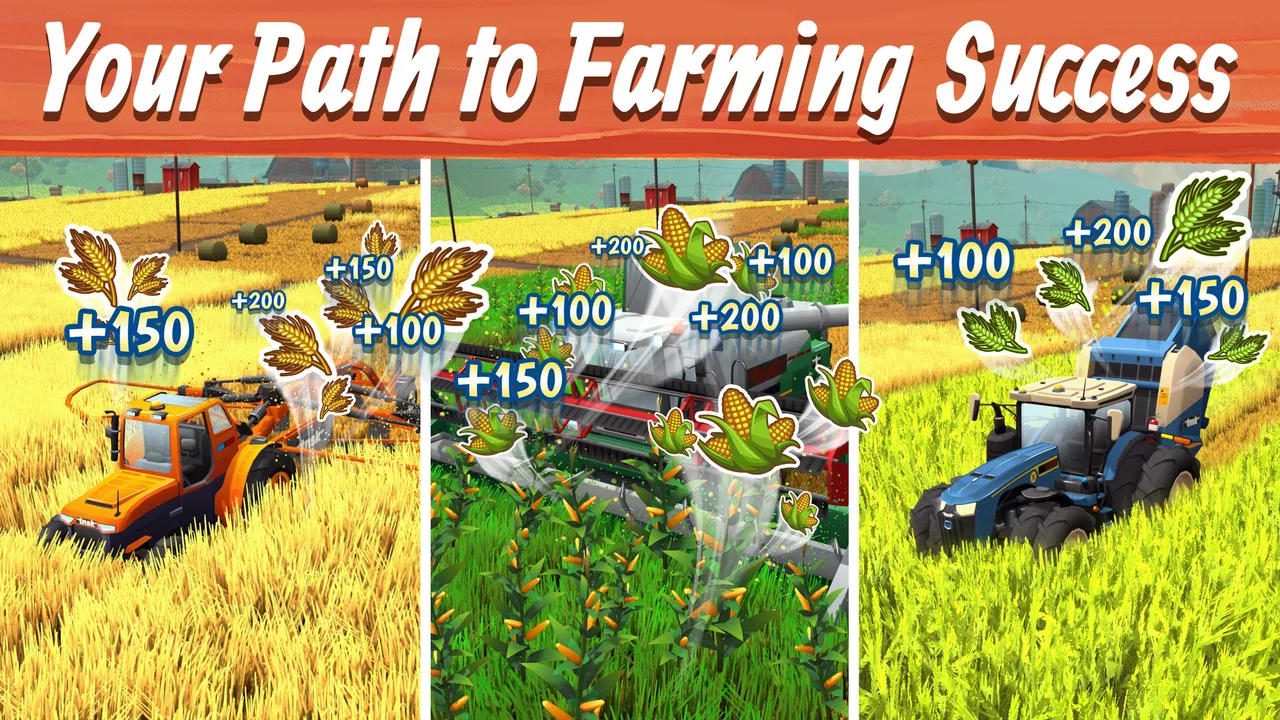
Big Farm: Mobile Harvest is a farming and management game in which you build and expand your own countryside farm. You can plant and harvest crops, raise animals, process goods, decorate your property, and complete orders or quests. The game combines relaxed farming activities with production planning, progression systems, and online features that encourage regular play and interaction with other players.
02Can I play Big Farm: Mobile Harvest offline?
Big Farm: Mobile Harvest is primarily designed as an online game, so an internet connection is generally required for important features such as saving progress, receiving events, connecting with other players, and accessing the game’s servers. Some basic activities may appear available briefly without a connection, but offline play is not guaranteed. A stable connection is recommended for the smoothest experience.
03Is Big Farm: Mobile Harvest free to download and play?
Yes, Big Farm: Mobile Harvest can be downloaded and played for free, but it includes optional in-app purchases. These purchases may provide premium currency, speed up construction or production, unlock useful resources, or offer special bundles. You can progress without spending money, although advancement may require more waiting and careful resource management. Parents should review purchase settings before allowing children to play.
04Does Big Farm: Mobile Harvest require a powerful phone or tablet?
The game is made for mobile devices and should run on many relatively modern Android and iOS phones or tablets. However, performance can vary depending on the device’s processor, available memory, operating-system version, and free storage space. Older devices may experience slower loading, reduced visual performance, or occasional crashes, particularly as your farm becomes larger and more detailed.
05What can I do in Big Farm: Mobile Harvest besides growing crops?
There is more to the game than planting and harvesting. You can care for farm animals, turn raw materials into products, fulfill customer orders, expand buildings, customize the farm, and participate in missions or limited-time events. Social elements may also let you cooperate or compete with other players. The main challenge is balancing production time, storage, money, and long-term farm upgrades.
Pros
- Relaxing farming gameplay suitable for short or extended sessions.
- Large variety of crops
- animals
- buildings
- and production chains.
- Regular events and tasks provide fresh goals beyond basic farming.
- Bright
- colorful visuals make the countryside pleasant to explore.
- Social features let you visit farms and interact with other players.
Cons
- Progress can become slow without spending premium currency.
- Many upgrades and expansions require substantial time or resources.
- Energy or task limits may interrupt longer play sessions.
- Online access is generally needed to manage and develop the farm.
- The interface can feel crowded as more buildings and features unlock.

Big Farm: Mobile Harvest
Gallery